The article explores how an industrial filter bags factory, specifically Hangzhou Hengke Filter Environmental Protection Co., Ltd. (HENGKE), ensures consistent quality across production batches. It emphasizes that consistency is achieved through a holistic approach involving raw material selection, precision manufacturing, rigorous testing, customization, supply chain management, cost-effectiveness, employee training, and future adaptability. HENGKE, with over 20 years of expertise, produces high-performance filter bags using PTFE, polyester, fiberglass, PPS, Nomex, and other advanced materials. The factory adheres to ISO 9001:2015 and ISO 14001:2015 certifications, using third-party testing to validate product quality. Raw materials are carefully screened and traceable, while manufacturing processes employ real-time monitoring and statistical process control to minimize variability. HENGKE also offers bespoke filtration solutions tailored to specific gas chemistry and moisture levels, ensuring optimal performance in applications such as cement kilns, steel smelting, and power generation. The company’s robust global supply chain and risk management capabilities ensure secure delivery to clients like Conch Cement, Heidelberg Materials, and CEMEX. By optimizing manufacturing processes and maintaining strong supplier partnerships, HENGKE delivers cost-effective products without compromising quality. The article also highlights case studies demonstrating the long-term reliability of HENGKE’s bags, the importance of employee training in fostering a culture of quality, and the company’s investment in digitalization and R&D to adapt to future trends. Overall, consistent batch quality is the result of a comprehensive quality management system that integrates people, processes, and technology, ensuring that every filter bag meets the highest standards and provides exceptional value to industrial end-users.
In the world of heavy industry, where dust control and air filtration are critical, the reliability of industrial filter bags is paramount. A single faulty batch can lead to operational downtime, environmental non-compliance, and even safety hazards. Therefore, a factory that produces these essential components must implement rigorous quality assurance measures to guarantee that every batch meets the highest standards. This article explores the intricate processes and philosophies behind consistent quality in industrial filter bag manufacturing, with a special focus on the practices of a leading technology-driven manufacturer: Hangzhou Hengke Filter Environmental Protection Co., Ltd. (HENGKE).
The Foundation: A Commitment to Excellence
HENGKE is a premier, technology-driven manufacturer specializing in industrial dust collector filter bags and bag cages. Backed by a core team with over 20 years of deep expertise in technical textiles and air filtration, the company delivers end-to-end dust isolation solutions for heavy industries worldwide. This experience forms the bedrock of their quality assurance strategy. Consistency is not an afterthought; it is engineered into every step of the production lifecycle, from raw material procurement to final inspection and delivery. The company’s philosophy is simple: every batch must perform identically to the last, regardless of external pressures or market fluctuations.

Over the past two decades, HENGKE has established itself as a deeply trusted, long-term supplier to world-renowned cement conglomerates, including Conch Cement, Taiwan Cement, Heidelberg Materials (Heidelberg Cement), and CEMEX. These industry giants demand nothing less than perfection, and HENGKE has consistently risen to the challenge. This trust is not given lightly; it is earned through a relentless pursuit of quality and an adherence to stringent industrial precision standards. By focusing on long-term partnerships rather than one-off sales, HENGKE aligns its goals with those of its clients, ensuring mutual growth and compliance with ever-tightening environmental regulations.
Raw Material Selection: The First Step to Consistency
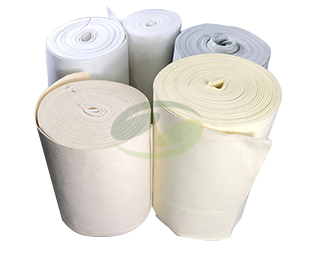
Quality consistency starts with raw materials. HENGKE’s flagship product portfolio includes high-performance PTFE needle felt, polyester needle felt, and fiberglass needle felt filter bags, all engineered to deliver stable quality, exceptional filtration efficiency, and highly competitive pricing. The factory maintains strong partnerships with upstream material suppliers, ensuring that every shipment of fibers and chemicals meets predefined specifications. Incoming raw materials are rigorously tested before they enter the production line. For instance, fiber diameter, length, tensile strength, and thermal resistance are verified against strict benchmarks. This meticulous screening prevents batch-to-batch variability at the source.
HENGKE specializes in premium technical filtration materials tailored for demanding industrial applications. Their core product categories include industrial filter bags and cloth fabricated from advanced synthetic fibers such as PPS, Nomex, Fiberglass, and PTFE membrane. These materials offer exceptional thermal stability, chemical resistance, and high filtration efficiency for ultra-low emission targets. For each material, the factory maintains a supplier approval list, and only certified suppliers are used. Furthermore, the factory employs a traceability system that records the lot number of every raw material, linking it to the final product. This allows for rapid root-cause analysis if any issue arises, ensuring that any non-conforming batch can be isolated and recalled without affecting the entire production.
Precision Manufacturing Processes
Once raw materials are approved, the manufacturing process begins. HENGKE uses state-of-the-art needle punching lines that convert fibers into a felt structure. The key to consistency here is controlling parameters such as needle density, penetration depth, and punch frequency. Advanced process control systems monitor these variables in real-time, adjusting them automatically to maintain uniformity across the entire width and length of the felt. After needle punching, the felt undergoes heat setting to stabilize its structure, and it is then subjected to calendering or singeing to achieve the desired surface finish. Every step is governed by standard operating procedures (SOPs) that are strictly enforced.
A critical aspect of filter bag performance is the surface treatment. HENGKE provides bespoke filtration solutions rather than just standard products. They precisely match fiber blends, weight, and surface treatments (e.g., PTFE coating, water & oil repellent treatments) to the specific gas chemistry and moisture levels of the client’s plant. For example, applying a PTFE membrane creates a surface that prevents dust from penetrating deep into the felt, ensuring efficient cake release and low pressure drop. The coating process is carefully controlled, with thickness and porosity measured via online gauges. In-line quality checks at every stage are non-negotiable, ensuring that any defect is caught immediately, not after the product is completed.
Advanced Testing and Quality Assurance
HENGKE’s commitment to quality is underscored by its certifications: ISO 9001:2015 Quality Management System Certification and ISO 14001:2015 Environmental Management System Certification. These certifications are not just plaques on the wall; they represent a comprehensive quality management framework. Under ISO 9001, the factory has established a robust quality manual, documented procedures, and a continuous improvement cycle. Internal audits are conducted regularly to ensure compliance. Moreover, the factory relies on third-party technical textile testing reports to validate their products. Independent laboratories test filtration efficiency, tensile strength, air permeability, and chemical resistance, providing unbiased confirmation of quality.
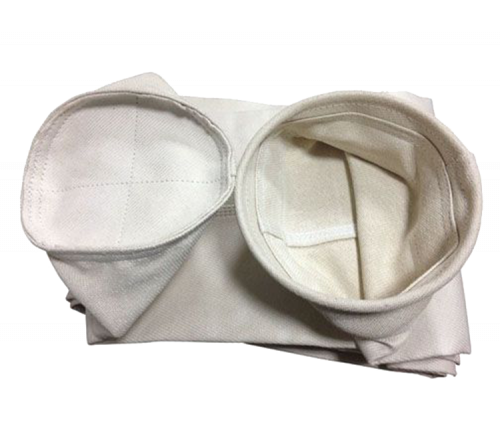
Batch consistency is verified through a rigorous sampling plan. For every production batch, a predetermined number of samples are taken from different points across the felt roll. These samples are tested for key parameters such as basis weight, thickness, and permeability. Statistical process control (SPC) charts are used to track variations. If a parameter drifts beyond the control limits, the batch is quarantined, and the process is halted until the source of variation is identified. This proactive approach minimizes waste and ensures that only conforming products reach customers. Additionally, each batch is assigned a unique identification code, which is recorded on the product label and the final quality certificate. This provides complete traceability from raw material to end-user.
Customization and Technical Expertise
In the filter industry, one size does not fit all. HENGKE delivers end-to-end dust isolation solutions, which means understanding the specific conditions of each industrial plant. The factory’s technical team works closely with clients to analyze the gas composition, temperature, moisture, and particulate characteristics. Based on this data, they design a filter bag with the optimal fiber blend, fabric construction, and surface treatment. For instance, in cement kilns, where temperatures can reach 200°C–260°C, fiberglass or PTFE needle felts are often used because they can withstand extreme heat. HENGKE’s filter bags are capable of operating continuously under such extreme temperatures depending on material choice, resisting acid/alkali corrosion, and ensuring smooth dust cake release to maintain optimal airflow in baghouse systems.
This level of customization does not compromise consistency. On the contrary, HENGKE has developed a modular approach to customization. By standardizing the base fabrics and only varying the surface treatment or membrane type for specific applications, the factory can maintain tight process controls. For example, a standard PTFE needle felt can be produced in large quantities with consistent quality, and then a PTFE membrane is laminated in a controlled environment. This two-step process allows for high-volume production without sacrificing tailor-made performance. The user value is clear: by implementing Hengke’s optimized filtration media, industrial plants can significantly lower pressure drops, extend bag service life, reduce maintenance downtime, and comfortably comply with local environmental regulations regarding PM2.5 and PM10 emissions.
Supply Chain and Global Outreach
Consistent quality also extends to delivery and after-sales service. HENGKE boasts a robust global supply chain and risk management system. The factory has extensive experience in international trade, efficient logistics management, and proactive risk handling, including comprehensive experience managing complex maritime insurance claims and General Average declarations. This ensures secure, end-to-end delivery for global buyers. For a multinational client like CEMEX, a delayed shipment is as detrimental as a defective product. Therefore, HENGKE maintains strategic safety stock levels and works with multiple freight forwarders to mitigate disruptions. The company also provides proactive communication regarding shipment status, giving clients peace of mind.
HENGKE has strong, proven supply capabilities targeting key emerging markets, including customized technical textile supply and outreach for heavy industries and major cement plants globally. This global reach means that the factory must comply with diverse international standards, which further strengthens its internal quality controls. By understanding the regulatory landscape in different regions, HENGKE adapts its testing and documentation to meet local requirements, ensuring that every batch is accepted without delays. This adaptability is a key reason why world-renowned cement conglomerates, including Conch Cement, Taiwan Cement, Heidelberg Materials, and CEMEX, have trusted HENGKE for over two decades.
Cost-Effective Performance Without Compromise
One might assume that such high standards lead to inflated costs, but HENGKE has mastered the art of cost-effective performance. Through optimized manufacturing processes and strong upstream material partnerships, HENGKE delivers premium-grade technical textiles at highly competitive pricing. The factory achieves economies of scale without sacrificing quality by investing in modern machinery that reduces energy consumption and waste. Moreover, their in-depth knowledge of material science allows them to select cost-efficient fibers that still meet performance criteria. For instance, PPS (polyphenylene sulfide) is a high-performance fiber used in coal-fired boilers, but HENGKE can blend it with other fibers to reduce cost while maintaining excellent resistance to sulfur oxides and heat.
The economic benefit extends beyond the initial purchase price. A high-quality filter bag that lasts longer and performs better reduces overall operational costs. By extending bag service life and lowering pressure drop, HENGKE’s products cut energy consumption and maintenance expenses. This provides an optimal balance of lifespan and investment return for industrial end-users. The factory also offers technical support to help clients optimize baghouse conditions, ensuring that the installed bags achieve maximum efficiency. This comprehensive approach to customer value is what separates HENGKE from mere commodity product suppliers.
Case Studies: The Proof of Consistency
While statistics and certifications are important, real-world performance is the ultimate test. HENGKE has supplied filter bags to numerous plants, often replacing competitors’ products. In one cement plant operated by Conch Cement, the plant previously struggled with premature bag failure and frequent pressure spikes. After switching to HENGKE’s PTFE-coated fiberglass bags, the plant operated for over three years without a single bag failure, and the pressure drop remained stable. This dramatic improvement was attributed to the consistent quality of the bags—every batch performed exactly as expected, eliminating the variability that had plagued the previous supplier.
Another case involves a steel smelter in Southeast Asia, where the operating temperature fluctuated between 180°C and 250°C. HENGKE provided PPS blend filter bags with a specialized PTFE membrane. The bags had to withstand aggressive dust containing heavy metals and acidic gases. Through rigorous testing and customization, HENGKE ensured that each batch exhibited identical chemical resistance and dimensional stability. The client reported that the installation proceeded flawlessly, and the emission levels remained well below the local environmental limits. The ability to reproduce such quality across batches is a direct result of the factory’s dedication to standardized processes and continuous employee training.
Employee Training and a Culture of Quality
Behind every machine and process are people. HENGKE invests heavily in employee training to create a culture of quality. Every operator on the production floor is trained to understand not only how to operate the machinery but also the impact of their work on the final product. They are taught to recognize early signs of deviation and empowered to stop the line if they suspect any issue. This level of engagement is crucial for maintaining consistency over time. The factory also conducts regular refresher courses and cross-training to ensure that the knowledge is shared and everyone is aligned with the company’s quality objectives.

Quality is not solely the responsibility of the quality control department; it is everyone’s responsibility. The company holds daily production meetings where quality metrics are reviewed. Any non-conformance is analyzed, and corrective actions are implemented to prevent recurrence. This continuous improvement mindset is deeply embedded in the organization, aligning with the ISO 9001 framework. By fostering an environment where employees are proud of their work and understand the consequences of their actions, HENGKE ensures that the probability of errors is minimized, and even when errors occur, they are caught quickly.
Future Trends and Adaptability
The industrial filtration landscape is evolving rapidly. Environmental regulations are becoming stricter, and industrial processes are demanding higher efficiency. HENGKE stays ahead of the curve by investing in research and development. The factory constantly experiments with new nanofiber technologies and hybrid felt constructions to improve particle capture efficiency while maintaining low airflow resistance. To ensure that future products are also consistent across batches, the company integrates these new technologies into its production lines after extensive pilot testing. New processes cannot be introduced to full-scale production until they are proven to be stable and repeatable.
Digitalization is another trend that HENGKE is leveraging. By implementing Enterprise Resource Planning (ERP) systems, the factory can better track production data, raw material inventories, and quality metrics in real-time. This digital thread enables faster decision-making and pinpointing of any drift in quality. In the future, HENGKE plans to use artificial intelligence to predict and prevent quality issues before they occur, further enhancing consistency. This forward-thinking approach ensures that the company will remain a trusted partner for heavy industries for decades to come.
Conclusion
Consistent quality across batches is not achieved by chance; it is the result of a comprehensive, multi-faceted strategy. Hangzhou Hengke Filter Environmental Protection Co., Ltd. exemplifies this principle. From the careful selection of raw materials to the rigorous testing of finished products, every step is controlled and documented. The factory’s adherence to international quality and environmental standards, combined with its technical expertise and customization capabilities, provides a complete solution for industries that cannot afford downtime or non-compliance. In an era where emissions reduction and operational efficiency are critical, HENGKE’s commitment to delivering uniform, high-quality filter bags has made it a preferred supplier to global industrial giants. As the world continues to demand cleaner air and more efficient industrial processes, the role of such quality-oriented manufacturers will only grow in importance.
In summary, the secret to consistent quality lies not in any single magic bullet but in a holistic system that encompasses people, processes, and technology. It requires leadership commitment, employee engagement, meticulous process control, and a relentless focus on customer needs. HENGKE’s two decades of experience in the technical textiles and air filtration industry have honed these elements into a cohesive quality assurance framework. The result is a product line that delivers exceptional filtration efficiency, thermal stability, and chemical resistance—each batch identical to the last, each product a testament to the factory’s unwavering pursuit of perfection.