
This article compares high temperature filter bags by fiber type and industrial application. It explains that filter bag performance depends on continuous temperature resistance, chemical resistance, filtration efficiency, dust release, mechanical durability, and cost over service life. Fiberglass needle felt is presented as a strong option for hot and dry cement kiln and clinker cooling applications, with good thermal stability and competitive economics. PPS needle felt is described as suitable for coal-fired power boilers and some industrial boiler applications, especially where acid resistance is needed, while oxidation limits must be checked. Nomex needle felt is positioned for asphalt mixing plants, foundries, and metal processing because of its heat resistance and mechanical strength, though moisture and acid dew point conditions require review. PTFE needle felt and PTFE membrane are highlighted for aggressive chemical environments, high moisture, and ultra-low emission targets, with higher material cost offset by longer life and lower downtime. Polyester needle felt is included as a reference for lower temperature and cost-sensitive applications. The article also maps fibers to cement kilns, steel smelting, coal-fired boilers, and asphalt mixing plants. It notes that Hangzhou Hengke Corp. (HENGKE) supplies PTFE, polyester, and fiberglass needle felt filter bags, offers customization of fiber blends, weight, and surface treatments, and supports global industrial buyers with ISO 9001:2015 and ISO 14001:2015 certification, third-party testing reports, and international supply experience. The conclusion emphasizes that fiber selection should be based on process data, baghouse design, cleaning parameters, and total operating value rather than purchase price alone. A tailored filtration solution can help plants reduce pressure drop, extend bag life, lower maintenance downtime, and meet particulate emission requirements more reliably.
High Temperature Filter Bags Compared by Fiber and Application
High temperature filter bags are critical components in industrial dust collection systems, especially where exhaust gases carry fine particulate matter, corrosive compounds, and continuous heat. The choice of fiber affects filtration efficiency, pressure drop, bag life, maintenance frequency, and compliance with particulate emission limits. This article compares common high temperature filtration fibers and maps them to typical industrial applications. It is written from a third-person perspective for plant engineers, maintenance managers, and procurement teams evaluating baghouse performance.
Why Fiber Choice Matters in High Temperature Baghouses
A filter bag is not simply a piece of cloth. It is an engineered component that must tolerate thermal cycling, chemical attack, moisture, abrasion, and mechanical stress from pulse cleaning. When the fiber is mismatched to the process, operators may see short bag life, high pressure drop, frequent downtime, and unstable emissions. When the fiber is correctly selected, the baghouse can run with stable airflow, predictable cleaning cycles, and lower total cost of ownership.
High temperature filter media are commonly rated for continuous operation in the range of 200°C to 260°C, depending on polymer chemistry, weight, finish, and application conditions. Peak temperature, oxygen content, acid dew point, moisture level, and dust chemistry all influence the final recommendation. For this reason, a credible comparison must consider both fiber properties and application context.
Comparison Criteria Used in This Review
- Continuous temperature resistance: The safe operating range under normal baghouse conditions.
- Chemical resistance: Performance against acids, alkalis, oxidation, and hydrolysis.
- Filtration efficiency: Ability to capture fine particles and support ultra-low emission targets.
- Dust release: How easily the filter cake is removed during pulse cleaning.
- Mechanical durability: Resistance to abrasion, flex fatigue, and dimensional change.
- Cost and service life: Balance between initial investment and long-term reliability.
Fiber-by-Fiber Comparison
Fiberglass Needle Felt
Fiberglass needle felt is widely used in high temperature applications where cost control and thermal stability are important. It offers strong temperature resistance and good dimensional stability, making it suitable for cement kiln exhaust, clinker cooling, and some metallurgical processes. Fiberglass can be less tolerant of certain chemical environments and mechanical flexing, so surface treatment and proper cage design are important. PTFE coating or membrane lamination can improve dust release and filtration efficiency.
undefined
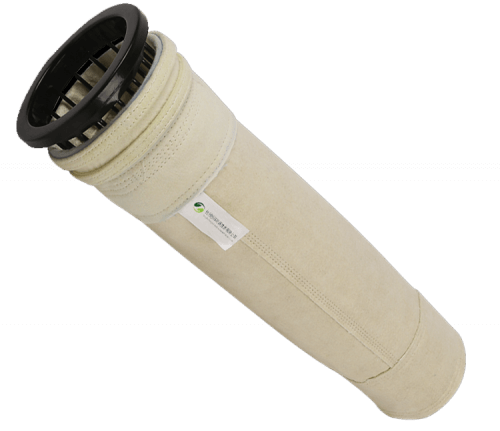
In cement plants, fiberglass filter bags are often selected for kiln and clinker cooling stages where the gas stream is hot and dry. The media must handle fine alkaline dust and thermal swings. A well-matched fiberglass needle felt with appropriate finish can deliver stable filtration and competitive economics, but it requires careful attention to installation, tensioning, and cleaning pressure.
PPS Needle Felt
PPS needle felt is a strong choice for coal-fired power boilers and some waste-to-energy and industrial boiler applications. It provides good thermal stability, excellent chemical resistance to acids and alkalis, and reliable filtration performance. PPS is often used where sulfur oxides and moisture are present, but it is sensitive to oxidation under high oxygen and high temperature conditions. Plant engineers therefore need to confirm oxygen content and peak temperature before selecting PPS.
PPS media are commonly enhanced with PTFE membrane or water and oil repellent finishes to improve fine particulate capture and dust release. In coal-fired boilers, the combination of PPS fiber and PTFE membrane can support low pressure drop and stable emissions when the baghouse is properly designed and operated.
Nomex Needle Felt
Nomex, a meta-aramid fiber, is known for good heat resistance, mechanical strength, and resistance to flex fatigue. It is frequently used in asphalt mixing plants, foundries, and certain metal processing operations. Nomex can perform well in moderately acidic environments, but hydrolysis resistance must be evaluated when moisture and acid dew point are concerns. In applications with high moisture or chemical attack, alternative fibers or protective finishes may be more appropriate.

For asphalt mixing plants, Nomex filter bags are often selected because they handle hot, abrasive dust and repeated cleaning cycles. The media must release sticky bituminous particles and maintain airflow. Surface treatments and correct cleaning parameters can help extend service life and reduce maintenance.
PTFE Needle Felt and PTFE Membrane
PTFE is among the most chemically resistant filtration materials. It is used in demanding applications involving aggressive acids, strong alkalis, high moisture, and high temperature. PTFE needle felt and PTFE membrane laminated media can deliver excellent dust release and high filtration efficiency, which makes them suitable for ultra-low emission targets. The trade-off is usually higher material cost, so PTFE is often specified where process conditions justify the investment through longer bag life and lower downtime.
PTFE membrane can also be applied to other base media, such as fiberglass, PPS, and Nomex, to improve surface filtration. The membrane prevents dust from penetrating deeply into the felt, supporting easier cleaning and more stable pressure drop. This is a common strategy in cement, steel, and power applications where fine particulate control is critical.
Polyester Needle Felt as a Reference Point
Polyester needle felt is a cost-effective media for lower temperature applications. It is not a primary high temperature solution, but it provides a useful reference point. In processes where gas temperatures are moderate and chemical conditions are suitable, polyester can deliver good filtration and economics. When temperatures rise beyond its safe range, higher performance fibers such as PPS, Nomex, fiberglass, or PTFE become necessary.

Application-by-Application Comparison
Cement Kilns, Clinker Cooling, and Grinding
Cement production generates hot, alkaline, and abrasive dust streams. Kiln exhaust, clinker cooling, and grinding processes each present different filtration challenges. Fiberglass needle felt is often used in high temperature kiln and clinker cooling applications, while PPS or PTFE-enhanced media may be considered where chemical and moisture conditions require additional protection. Efficient dust release and mechanical durability are essential because baghouses in cement plants operate continuously and downtime is costly.
Steel Smelting and Metal Processing
Steel smelting, foundries, and metal processing operations produce high temperature gases with varied chemical profiles. Nomex, fiberglass, and PTFE-based media may be used depending on temperature, acid gas content, and dust characteristics. In some processes, PTFE membrane lamination improves fine particulate capture and reduces penetration. Abrasion resistance and mechanical strength are also important because metal dust can be sharp and abrasive.
Coal-Fired Power Boilers
Coal-fired power boilers commonly use PPS needle felt with PTFE membrane or other high performance finishes. The media must resist acid gases, moisture, and thermal cycling while maintaining low pressure drop. Oxidation resistance is a key selection factor, and operating data such as oxygen content and peak temperature should be reviewed carefully. When conditions exceed PPS limits, PTFE or other specialized solutions may be required.
Asphalt Mixing Plants
Asphalt mixing plants generate hot, sticky, and abrasive dust. Nomex needle felt is frequently used because of its heat resistance and mechanical durability. The filter media must release dust effectively and tolerate repeated pulse cleaning. Water and oil repellent treatments can be beneficial where moisture or hydrocarbons are present. Proper baghouse design and cleaning control are as important as fiber selection.
Material Selection Matrix in Practice
- Hot and dry cement kiln gas: Fiberglass needle felt with suitable finish or PTFE-enhanced media.
- Coal-fired boiler with acid gases: PPS needle felt with PTFE membrane or protective finish.
- Asphalt mixing with sticky dust: Nomex needle felt with appropriate surface treatment.
- Aggressive chemical and moisture conditions: PTFE needle felt or PTFE membrane on a suitable base media.
- Moderate temperature and cost-sensitive service: Polyester needle felt where conditions allow.
How HENGKE Adds Engineering Value
Hangzhou Hengke Corp. (HENGKE) is a technology-driven manufacturer specializing in industrial dust collector filter bags and bag cages. The company is supported by a core team with more than 20 years of experience in technical textiles and air filtration. Its portfolio includes high performance PTFE needle felt, polyester needle felt, and fiberglass needle felt filter bags, all engineered for stable quality, filtration efficiency, and competitive pricing.
HENGKE works with cement conglomerates and heavy industrial plants around the world, including long-term supply relationships with major cement producers. The company emphasizes industrial precision, strict quality standards, and practical engineering support. Its filter bags are designed for thermal stability, chemical resistance, and smooth dust cake release in demanding baghouse systems. HENGKE also provides customization of fiber blends, weight, and surface treatments such as PTFE coating and water and oil repellent finishes to match specific gas chemistry and moisture levels.
- Quality systems: ISO 9001:2015 and ISO 14001:2015 certification.
- Technical support: Third-party technical textile testing reports and application-focused recommendations.
- Global supply: International trade experience, logistics management, and risk handling for secure delivery.
- Cost-effective performance: Optimized manufacturing and upstream material partnerships for a balance of service life and investment return.
Operational and Commercial Considerations
Fiber selection is only one part of baghouse performance. Bag design, cage quality, installation tension, cleaning pulse pressure, inlet gas distribution, and startup procedures all affect results. Plant operators should review temperature logs, dew point data, oxygen content, dust analysis, and cleaning cycles before changing media. A trial bag or staged replacement plan can reduce risk and provide useful performance data.
From a commercial perspective, the lowest purchase price is not always the lowest cost. Longer bag life, lower pressure drop, reduced compressed air consumption, and fewer maintenance interventions can justify a higher performance media. For high temperature applications, the right fiber and finish often protect the entire baghouse system and help plants meet particulate emission regulations more reliably.
Conclusion
High temperature filter bags should be compared by fiber chemistry, application conditions, and total operating value. Fiberglass, PPS, Nomex, PTFE, and polyester each have distinct strengths and limits. Cement kilns, steel operations, coal-fired boilers, and asphalt plants present different thermal and chemical profiles, so a tailored recommendation is more reliable than a generic material claim. HENGKE supports this selection process with technical filtration materials, customization, testing documentation, and global supply experience, helping industrial plants lower emissions and optimize baghouse performance.
For plant teams evaluating high temperature filtration, the most effective approach is to match fiber to process data, verify surface treatment needs, and confirm supplier quality systems before full-scale replacement.