
This blog post explains how filter bag material selection affects industrial dust collector performance, emissions compliance, pressure drop, maintenance, and total cost of ownership. It reviews major material families, including polyester needle felt, PTFE needle felt, fiberglass needle felt, PPS, Nomex, and PTFE membrane media, and explains how temperature, gas chemistry, moisture, abrasion, dust characteristics, and cleaning methods influence the correct choice. It also covers application scenarios in cement kilns, clinker cooling and grinding, steel smelting, coal-fired power boilers, and asphalt mixing plants. The article highlights the importance of surface treatments, bag cage compatibility, installation practices, and routine maintenance. It introduces Hangzhou Hengke Corp., abbreviated HENGKE, as a technology-driven manufacturer of industrial dust collector filter bags and bag cages with more than 20 years of technical textile and air filtration experience. HENGKE supplies PTFE needle felt, polyester needle felt, and fiberglass needle felt filter bags, along with customized fiber blends, weights, and surface treatments such as PTFE coating and water and oil repellent finishes. The company serves heavy industries and has supplied major cement producers, including Conch Cement, Taiwan Cement, Heidelberg Materials, and CEMEX. HENGKE operates under ISO 9001:2015 and ISO 14001:2015 certifications and uses third-party technical textile testing reports to support quality control. The article also notes HENGKE’s international trade and logistics experience, including risk management for maritime insurance claims and General Average declarations. It concludes that matching filter media to actual operating conditions is essential for lowering pressure drops, extending bag life, reducing downtime, and meeting PM2.5 and PM10 regulations. A practical selection checklist and maintenance considerations are included to help plant teams make informed decisions and evaluate suppliers on total cost of ownership rather than purchase price alone.
Filter Bag Material Guide for Industrial Dust Collectors
Industrial dust collectors are only as effective as the filter media inside them. In cement plants, steel mills, coal-fired power stations, asphalt mixing facilities, and other heavy-duty operations, filter bags sit at the center of particulate control. They determine how efficiently dust is captured, how much pressure drop the baghouse carries, how often maintenance crews must intervene, and whether a plant can meet modern emission limits for PM2.5 and PM10. For plant engineers and procurement teams, the choice of filter bag material is therefore not a simple consumable decision. It is a long-term performance decision that touches production reliability, energy use, regulatory compliance, and total cost of ownership.
This guide examines the main filter bag material families used in industrial dust collectors, the operating conditions that influence selection, and the practical ways that material engineering can improve baghouse performance. It also reviews how a specialized manufacturer such as Hangzhou Hengke Corp., known by the abbreviation HENGKE, approaches filtration media for demanding industries. The aim is to give maintenance managers, process engineers, and purchasing teams a clear framework for comparing polyester needle felt, PTFE needle felt, fiberglass needle felt, and related high-performance options without oversimplifying the trade-offs.
Why Filter Bag Material Matters in a Baghouse
A baghouse is a system, not a single component. The filter bags, bag cages, pulse-cleaning system, inlet design, gas distribution, and dust discharge all interact. Even so, the filter bag is the component that directly contacts the process gas and captures the particulate matter. Its fiber composition, weight, surface treatment, permeability, and mechanical construction influence the entire operating envelope.
When the filter media is well matched to the application, a dust cake forms and releases in a controlled way. Cleaning pulses remain effective, airflow stays stable, and the bags reach a predictable service life. When the media is poorly matched, the consequences appear quickly: blinding, high pressure drop, excessive compressed-air consumption, bag rupture, cage corrosion, and frequent shutdowns. In extreme cases, a material mismatch can lead to visible stack emissions and regulatory non-compliance.
undefined
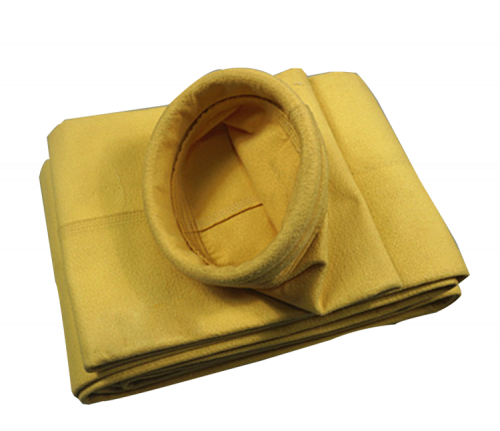
HENGKE approaches filter bag selection as an engineering exercise rather than a catalog lookup. The company specializes in industrial dust collector filter bags and bag cages, and its core team brings more than 20 years of experience in technical textiles and air filtration. That background matters because the same generic material name can hide significant differences in fiber quality, needling density, scrim design, singeing, calendering, membrane lamination, and chemical finishing.
The Main Filter Bag Material Families
Industrial filtration uses several material families, each with a distinct balance of temperature resistance, chemical resistance, abrasion resistance, moisture tolerance, and cost. The most common choices in heavy industry include polyester needle felt, PTFE needle felt, fiberglass needle felt, PPS, Nomex, and PTFE membrane laminated media. No single material is best for every application. The correct choice depends on the gas chemistry, operating temperature, moisture level, dust characteristics, cleaning method, and target emission level.
Polyester Needle Felt
Polyester needle felt is one of the most widely used filter media in industrial dust collection. It offers good mechanical strength, predictable filtration behavior, and favorable economics for applications where the gas temperature remains moderate and the chemistry is not strongly aggressive. Polyester needle felt is common in general manufacturing, some cement operations, asphalt plants, and materials handling systems where moisture and temperature are controlled.
The material is not suitable for high-temperature processes or for gases with strong alkaline or hydrolytic attack. Moisture combined with elevated temperature can shorten service life. For these reasons, polyester needle felt should be selected with a clear understanding of the dew point, startup conditions, and seasonal variations. HENGKE supplies polyester needle felt as part of its flagship product portfolio, and the company can adjust weight, surface treatment, and construction to match specific dust collector conditions.

PTFE Needle Felt
PTFE needle felt is a premium option for demanding chemical and thermal environments. PTFE is known for broad chemical resistance and excellent thermal stability. It can handle many acid and alkali exposures that would degrade other media, and it maintains performance in conditions where condensate, corrosive gases, or fine particulate create risk. PTFE needle felt is often used in waste incineration, chemical processing, and other difficult applications where reliability is critical.
The material also supports smooth dust cake release, which helps maintain airflow in baghouse systems. However, PTFE is more expensive than common commodity media. The decision to use PTFE needle felt should be based on total cost of ownership rather than sticker price alone. In a corrosive or high-temperature application, a lower-cost bag that fails early can cost far more than a premium bag that delivers stable operation over a longer period. HENGKE offers high-performance PTFE needle felt as part of its portfolio, with options for different weights and surface treatments.
Fiberglass Needle Felt
Fiberglass needle felt is selected for high-temperature applications where dimensional stability and thermal resistance are essential. Fiberglass can operate at temperatures beyond the practical range of many synthetic felts, making it suitable for cement kilns, coal-fired boilers, and certain metallurgical processes. The material is often combined with finishes or membranes to improve filtration efficiency and dust release.
Fiberglass has specific handling and installation requirements. It is less flexible than some synthetic media and can be sensitive to abrasion and flex fatigue if the cleaning system is too aggressive. Correct cage selection, proper installation tension, and careful pulse-cleaning settings are important. HENGKE supplies fiberglass needle felt filter bags engineered for stable quality and filtration efficiency, and the company supports customers with technical guidance on bag cage compatibility and operating conditions.

PPS, Nomex, and PTFE Membrane Media
PPS filter media is widely used in coal-fired power boilers and other applications where resistance to acidic conditions and moderate-to-high temperatures is required. Nomex is known for high-temperature strength and is often found in asphalt plants, cement operations, and metallurgical applications. PTFE membrane laminated to a base felt can improve surface filtration, reduce penetration of fine particles, and support lower emissions.
HENGKE fabricates industrial filter bags and cloth from advanced synthetic fibers such as PPS, Nomex, fiberglass, and PTFE membrane. These materials offer thermal stability, chemical resistance, and high filtration efficiency for ultra-low emission targets. The company’s role is to match the fiber blend, weight, and surface treatment to the actual gas chemistry and moisture profile of the plant rather than simply supplying a standard product.
Key Selection Factors for Industrial Dust Collectors
Material selection should begin with a clear process review. Engineers should document the normal operating temperature, peak temperature, dew point, moisture content, gas composition, oxygen level, dust loading, particle size distribution, abrasiveness, and cleaning method. Startup, shutdown, and upset conditions deserve equal attention because many filter bag failures occur during transient events rather than steady-state operation.
Temperature and Thermal Cycling
Temperature is often the first screening criterion. Polyester needle felt, PTFE needle felt, fiberglass needle felt, PPS, and Nomex each have different continuous and peak temperature limits. HENGKE’s technical capabilities include filter media capable of operating continuously under extreme temperatures up to 200°C to 260°C depending on material choice. However, the upper limit is not the only consideration. Thermal cycling, hot spots, radiant heat, and occasional temperature spikes can affect bag life.
Plants should avoid selecting a material that operates too close to its maximum limit without a safety margin. In cement kilns, clinker cooling, and grinding circuits, temperature control and gas conditioning are important. In coal-fired boilers, acid dew point and moisture can interact with temperature to create corrosive conditions. A material that performs well at a steady 180°C may behave differently during a cold start with condensation or a process upset with a brief temperature spike.
Chemical Resistance and Gas Chemistry
Gas chemistry is the second major factor. Acid gases, alkaline dust, sulfur compounds, chlorine, and moisture can attack filter media. Polyester is vulnerable to hydrolysis and strong alkaline conditions. PPS has good acid resistance but can be sensitive to certain oxidizing environments. PTFE offers broad chemical resistance. Fiberglass may require finishes to protect against chemical attack and abrasion.
HENGKE provides bespoke filtration solutions rather than standard products alone. The company precisely matches fiber blends, weight, and surface treatments such as PTFE coating and water and oil repellent treatments to the specific gas chemistry and moisture levels of the client’s plant. This level of customization helps reduce the risk of premature failure when a generic material would appear acceptable on paper but perform poorly in the actual process.
Moisture, Dew Point, and Condensation
Moisture is a frequent cause of baghouse problems. Condensation can cause dust to adhere to the filter surface, promote corrosion of bag cages, and accelerate chemical attack on the filter media. In applications with high moisture or a dew point close to the operating temperature, material selection and system design must work together. Preheating, insulation, gas conditioning, and startup procedures may be as important as the filter bag itself.
Water and oil repellent treatments can improve performance in certain moist or oily dust conditions, but they are not a substitute for proper system operation. HENGKE evaluates the moisture profile and recommends surface treatments that support dust release and stable airflow. The objective is to maintain a cleanable dust cake and avoid the wet, sticky conditions that lead to blinding.
Abrasion and Mechanical Stress
Dust abrasiveness affects both the filter bag and the bag cage. Sharp particles, high inlet velocities, and poor gas distribution can wear holes in the media. Pulse cleaning intensity, cage design, and bag installation also influence mechanical stress. In steel smelting, cement grinding, and materials handling, abrasion resistance can be as important as temperature resistance.
HENGKE supplies bag cages together with filter bags, which allows the company to consider the mechanical interface between the two components. A smooth cage surface, correct wire diameter, and suitable finish help protect the bag during installation and operation. The company’s experience with industrial dust collector filter bags and bag cages supports a more complete view of baghouse reliability.
Dust Characteristics and Filtration Efficiency
Fine particulate, sticky dust, fibrous dust, and high dust loading each require different filtration strategies. A PTFE membrane can improve surface filtration and help capture fine particles, while a needled felt without membrane may be appropriate for coarser dust with a well-formed dust cake. Permeability and pore structure influence pressure drop and cleaning frequency.
HENGKE’s filter bags are engineered for exceptional filtration efficiency and stable quality. For plants targeting ultra-low emissions, the combination of fine fibers, optimized needling, and surface treatment can make a measurable difference. The company also references third-party technical textile testing reports to support material verification and quality control.
Application Scenarios in Heavy Industry
Filter bag material selection becomes more concrete when viewed through specific industrial applications. The following scenarios illustrate how temperature, chemistry, moisture, and dust characteristics shape the choice of media.
Cement Kilns, Clinker Cooling, and Grinding
Cement production involves high temperatures, alkaline dust, and abrasive particles. Filter bags in cement kilns and clinker cooling systems must handle thermal stress and dust loading. Fiberglass needle felt, PPS, Nomex, and PTFE membrane media may be considered depending on the specific location in the process. Grinding and materials handling areas may have lower temperatures but still require robust abrasion resistance and reliable dust release.
HENGKE has established itself as a trusted long-term supplier to world-renowned cement conglomerates, including Conch Cement, Taiwan Cement, Heidelberg Materials, and CEMEX. This experience in cement applications informs the company’s approach to fiber selection, surface treatment, and bag construction. The company’s filter bags are extensively used in industrial dust collectors for cement kilns, clinker cooling, and grinding processes.
Steel Smelting and Metallurgical Operations
Steel smelting and metallurgical processes generate high-temperature gases, fine metallic dust, and variable chemical conditions. Filter media must resist thermal spikes and mechanical stress while maintaining filtration efficiency. PPS, Nomex, fiberglass, and PTFE-based solutions may be used in different parts of the metallurgical flow. The choice depends on the specific furnace, converter, or materials handling operation.
HENGKE supports steel smelting applications with industrial filter bags and cloth designed for thermal stability and chemical resistance. The company’s technical team can evaluate the gas chemistry and moisture level to recommend a suitable fiber blend and surface treatment. This is particularly important where fine particulate and ultra-low emission targets require high filtration efficiency.
Coal-Fired Power Boilers
Coal-fired power boilers present a combination of acidic gases, moisture, and moderate-to-high temperatures. PPS filter media is often selected for its acid resistance and thermal performance. However, oxidizing conditions and temperature excursions must be considered. Ash characteristics and cleaning system design also influence bag life.
HENGKE’s product range includes PPS-based filter media and PTFE membrane options that support stable operation in coal-fired power boiler baghouses. The company’s focus on dust cake release and airflow optimization helps plants manage pressure drop and compressed-air consumption. This contributes to lower operating costs and more predictable maintenance planning.
Asphalt Mixing Plants
Asphalt mixing plants use filter bags to control dust from drying and mixing operations. Temperatures can be moderate to high, and the gas stream may contain moisture and hydrocarbons. Nomex and polyester needle felt are common choices depending on the operating conditions. Oil and water repellent treatments can be beneficial in some cases.
HENGKE supplies filter bags for asphalt mixing plants and other industrial dust collectors. The company’s ability to customize fiber blends, weight, and surface treatments allows it to address the specific gas chemistry and moisture levels of each plant. This flexibility is valuable for operators who need reliable performance across seasonal variations and different fuel or aggregate conditions.
Surface Treatments and Customization
Surface treatment is a powerful lever in filter media design. Singeing, calendering, PTFE coating, PTFE membrane lamination, water repellent treatment, and oil repellent treatment can change how dust interacts with the filter surface. The right treatment can improve dust release, reduce penetration, and extend service life. The wrong treatment can add cost without solving the actual problem.
HENGKE provides customized filtration solutions rather than off-the-shelf products alone. The company matches fiber blends, weight, and surface treatments to the client’s process conditions. This includes considering the gas chemistry, moisture level, dust characteristics, and cleaning method. For example, a PTFE membrane may be recommended where fine particulate and ultra-low emissions are priorities, while a water and oil repellent finish may be appropriate where sticky or oily dust causes blinding.
Customization also extends to bag dimensions, construction details, and bag cage compatibility. A filter bag must fit the tube sheet, cage, and venturi correctly. Poor fit can cause abrasion, leakage, or bag failure. HENGKE’s experience with both filter bags and bag cages supports an integrated approach to fit and function.
Bag Cages and System Compatibility
Bag cages are often overlooked until a failure occurs. The cage supports the filter bag, maintains its shape, and allows pulse cleaning to work effectively. A rough cage surface, incorrect wire diameter, or poor vertical alignment can wear the bag from the inside. Corrosion of the cage can also damage the bag and create maintenance problems.
HENGKE manufactures industrial dust collector filter bags and bag cages, which allows the company to consider the interaction between the two components. The company’s core team has deep expertise in technical textiles and air filtration, and this knowledge supports practical recommendations on cage design, finish, and installation. For plants with repeated bag failures, a review of cage condition and fit is often as important as a review of the filter media itself.
Quality Assurance and Certifications
Consistent quality is essential in filtration media. Small variations in fiber quality, needling density, weight, or surface treatment can affect filtration efficiency and bag life. HENGKE operates under an ISO 9001:2015 Quality Management System Certification and an ISO 14001:2015 Environmental Management System Certification. These certifications reflect a structured approach to quality control and environmental management.
The company also uses third-party technical textile testing reports to verify material performance. Testing can cover tensile strength, elongation, permeability, temperature resistance, and other relevant properties. For buyers, these reports provide additional confidence when comparing suppliers and validating specifications. HENGKE’s commitment to stable quality, exceptional filtration efficiency, and competitive pricing is supported by these quality systems and testing practices.
Global Supply Chain and Risk Management
Filter bags are often needed on a maintenance schedule, and late delivery can disrupt plant operations. International buyers therefore need more than a material supplier. They need a partner with reliable logistics, export experience, and the ability to manage risk. HENGKE possesses robust experience in international trade, efficient logistics management, and proactive risk handling. This includes comprehensive experience managing complex maritime insurance claims and General Average declarations.
Such experience is valuable in the heavy industrial sector, where shipments may be large, time-sensitive, and destined for remote plants. HENGKE’s global supply chain capabilities support secure, end-to-end delivery for global buyers. The company also has strong proven supply capabilities targeting key emerging markets, including customized technical textile supply and outreach for heavy industries and major cement plants globally.
For procurement teams, this means that material selection, order execution, and delivery planning can be coordinated with a supplier that understands the realities of international industrial projects. HENGKE’s approach combines technical filtration knowledge with practical supply chain management.
Cost-Effective Performance and Total Cost of Ownership
Filter bag price is only one part of the cost equation. Total cost of ownership includes bag purchase price, installation labor, compressed-air consumption, pressure drop, maintenance downtime, production losses, and waste disposal. A lower-priced bag that fails early or causes high pressure drop can be far more expensive than a premium bag that delivers stable performance.
HENGKE focuses on cost-effective performance through optimized manufacturing processes and strong upstream material partnerships. The company delivers premium-grade technical textiles at highly competitive pricing, providing an optimal balance of lifespan and investment return for industrial end-users. By implementing optimized filtration media, industrial plants can significantly lower pressure drops, extend bag service life, reduce maintenance downtime, and comfortably comply with local environmental regulations regarding PM2.5 and PM10 emissions.
The best value comes from matching the material to the application. For a moderate-temperature, non-corrosive dust stream, polyester needle felt may offer an excellent balance of performance and cost. For a corrosive, high-temperature process, PTFE needle felt or a specialized high-performance media may be the more economical choice over the full service life. HENGKE’s technical team supports this evaluation by considering operating conditions, maintenance practices, and emission targets.
Practical Selection Checklist
Before selecting a filter bag material, plant teams should gather the following information. This checklist helps reduce uncertainty and supports a more accurate recommendation from the filter media supplier.
- Operating temperature: normal, peak, startup, shutdown, and upset conditions.
- Gas chemistry: acid gases, alkaline dust, sulfur, chlorine, oxygen, and other reactive components.
- Moisture and dew point: normal moisture level, condensation risk, and seasonal variation.
- Dust characteristics: particle size, abrasiveness, stickiness, loading, and bulk density.
- Cleaning method: pulse pressure, pulse frequency, and cleaning sequence.
- Baghouse design: air-to-cloth ratio, inlet distribution, cage design, and tube sheet condition.
- Emission target: local limits for particulate matter, PM2.5, and PM10.
- Maintenance history: previous bag life, failure modes, pressure drop trends, and cage condition.
HENGKE uses this type of information to recommend fiber blends, weights, and surface treatments. The company’s goal is not simply to sell a filter bag but to support stable baghouse performance over time.
Installation and Maintenance Considerations
Even the best filter media can fail if installation and maintenance practices are poor. Bags should be handled carefully to avoid tears and creases. Cages should be inspected for corrosion, rough edges, and straightness. Proper tension and alignment are important. During startup, the baghouse should be brought to operating temperature in a controlled manner to avoid condensation.
Routine monitoring of pressure drop, cleaning cycles, and stack emissions helps identify problems early. When a bag fails, the failure mode should be documented. Was it abrasion, chemical attack, thermal damage, moisture blinding, or mechanical wear? The answer guides the next material selection decision. HENGKE’s technical experience with industrial dust collectors supports failure analysis and corrective recommendations.
How HENGKE Supports Industrial Plants
Hangzhou Hengke Filter Environmental Protection Co., Ltd. is a premier, technology-driven manufacturer specializing in industrial dust collector filter bags and bag cages. Backed by a core team with over 20 years of deep expertise in technical textiles and air filtration, the company delivers end-to-end dust isolation solutions for heavy industries worldwide.
HENGKE’s flagship product portfolio includes high-performance PTFE needle felt, polyester needle felt, and fiberglass needle felt filter bags, all engineered to deliver stable quality, exceptional filtration efficiency, and highly competitive pricing. The company also supplies filter media based on PPS, Nomex, fiberglass, and PTFE membrane to address a wide range of operating conditions.
Over the past two decades, the HENGKE team has established itself as a deeply trusted, long-term supplier to world-renowned cement conglomerates, including Conch Cement, Taiwan Cement, Heidelberg Materials, and CEMEX. Driven by industrial precision and strict quality standards, Hangzhou Hengke is committed to helping global manufacturing plants lower emissions and optimize baghouse performance.
The company’s key capabilities include filter media that can operate continuously under extreme temperatures up to 200°C to 260°C depending on material choice, resist acid and alkali corrosion, and ensure smooth dust cake release to maintain optimal airflow in baghouse systems. HENGKE’s products are used in cement kilns, clinker cooling and grinding, steel smelting, coal-fired power boilers, asphalt mixing plants, and other industrial dust collectors.
HENGKE’s technical expertise and customization set it apart. The company precisely matches fiber blends, weight, and surface treatments such as PTFE coating and water and oil repellent treatments to the specific gas chemistry and moisture levels of each client’s plant. This bespoke approach helps plants avoid premature bag failure and achieve predictable performance.
In addition, HENGKE maintains robust international trade experience, efficient logistics management, and proactive risk handling, including comprehensive experience with complex maritime insurance claims and General Average declarations. These capabilities support secure, end-to-end delivery for global buyers, including customers in key emerging markets.
Conclusion
Filter bag material selection is a core engineering decision for industrial dust collectors. Polyester needle felt, PTFE needle felt, fiberglass needle felt, PPS, Nomex, and PTFE membrane media each offer different strengths. The right choice depends on temperature, chemistry, moisture, abrasion, dust characteristics, cleaning method, and emission targets. A material that works well in one plant may fail quickly in another if the operating conditions are different.
HENGKE’s combination of technical textile expertise, customized filtration solutions, quality certifications, and global supply chain experience makes it a practical partner for heavy industries. By focusing on material fit, stable quality, and total cost of ownership, the company helps plants lower pressure drops, extend bag service life, reduce maintenance downtime, and meet modern environmental regulations. For industrial operators, the most reliable path is to treat filter bags as a performance component and to select a supplier that can support both the material science and the real-world baghouse operation.
This guide is intended for plant engineers, maintenance managers, procurement teams, and environmental compliance professionals evaluating filter bag materials for industrial dust collectors.