
This article explains practical ways to improve the strength and durability of fiberglass filter bags in high-temperature industrial dust collection systems. It highlights the importance of matching fiberglass media to gas chemistry, moisture, temperature, and dust conditions; protecting bags during storage and handling; verifying bag cage quality; installing bags with correct tension and alignment; controlling temperature and dew point; optimizing pulse-jet cleaning; and using surface treatments such as PTFE coating only where they add value. It also recommends monitoring pressure drop, watching for leak signals, following planned inspections, and working with a technically capable supplier. Hangzhou Hengke Corp., or HENGKE, is presented as an experienced manufacturer of industrial filter bags and bag cages, including fiberglass needle felt, PTFE needle felt, and polyester needle felt bags. The company supports customized filtration solutions, international supply, quality certification, and long-term performance for cement, steel, power, and asphalt applications.
Fiberglass Filter Bag Tips for Better Strength and Durability
Fiberglass filter bags are widely used in high-temperature industrial dust collection systems, especially where cement kilns, steel smelting, coal-fired boilers, and asphalt mixing plants demand stable filtration performance under severe conditions. For plant operators, the difference between average bag life and excellent bag life often comes down to material selection, handling discipline, installation accuracy, and maintenance strategy. Hangzhou Hengke Corp., known as HENGKE, brings more than two decades of technical textile and air filtration experience to this field. The company supplies high-performance PTFE needle felt, polyester needle felt, and fiberglass needle felt filter bags, and its team has supported major industrial groups with filtration solutions designed for lower emissions and optimized baghouse performance.
Fiberglass filter bags offer strong thermal stability and good dimensional integrity, but their strength and durability are not automatic. They depend on fiber quality, needle felt construction, surface treatment, bag cage compatibility, cleaning intensity, and operating conditions. A fiberglass bag that is correctly specified and carefully maintained can deliver long service life, smooth dust cake release, and reliable airflow. A bag that is mishandled or operated outside its design envelope may suffer abrasion, flex fatigue, chemical attack, or moisture-related failure. The following tips help industrial teams protect fiberglass filter bag strength and extend service life.
1. Match the Fiberglass Media to the Actual Gas Chemistry
Fiberglass is often chosen for high-temperature duty, but temperature alone is not enough. Plant teams should review gas composition, moisture level, acid and alkali exposure, oxygen content, and dust characteristics. HENGKE emphasizes bespoke filtration solutions rather than standard products. Its technical team can match fiber blends, weight, and surface treatments such as PTFE coating and water and oil repellent treatments to the specific gas chemistry and moisture levels of a client plant. This approach helps reduce chemical attack and keeps the filter media stable in demanding applications.
undefined
Key review points before selection
- Continuous and peak operating temperatures, including startup and shutdown conditions.
- Acid dew point risk and moisture content in the flue gas.
- Dust load, particle size, abrasiveness, and tendency to form sticky deposits.
- Cleaning method, pulse pressure, and cleaning frequency.
- Bag cage condition, dimensional tolerance, and surface finish.
2. Protect the Bag During Storage and Handling
Fiberglass media can lose strength if it is crushed, folded sharply, or dragged across rough surfaces. Bags should be stored in a clean, dry area away from sunlight, moisture, and chemical fumes. They should remain in their packaging until installation, and they should not be compressed by heavy objects. Maintenance crews should carry bags carefully and avoid sharp bends. Even small surface damage can become a starting point for abrasion and leakage once the baghouse is in service.

3. Verify Bag Cage Quality and Fit
The bag cage is a critical partner to the filter bag. Bent wires, rough welds, missing coatings, or incorrect dimensions can wear a fiberglass bag from the inside. Before installation, teams should inspect cages for straightness, weld quality, and surface smoothness. Cages should be centered and free from burrs. A proper fit reduces movement and abrasion during pulse cleaning. HENGKE supplies industrial filter bags and bag cages as part of end-to-end dust isolation solutions, which helps clients align bag and cage specifications for better mechanical reliability.
4. Install with Correct Tension and Alignment
Installation quality strongly affects durability. Bags should be aligned vertically, seated correctly at the tube sheet, and tensioned according to the design. Over-tensioning can stress the fabric, while under-tensioning can cause movement, rubbing, and poor cleaning. Installation teams should avoid twisting the bag and should confirm that the venturi, if used, is properly positioned. In high-temperature systems, allowance should be made for thermal expansion. A disciplined installation checklist prevents many early failures.
5. Control Temperature and Moisture Carefully
Fiberglass filter bags can operate continuously under extreme temperatures, up to 200°C to 260°C depending on material choice, but temperature excursions and moisture spikes still require attention. Startup and shutdown periods are especially important. If the gas temperature falls below the acid dew point, condensation can combine with dust and acids to damage the fabric. If temperature rises above the design limit, fiber strength may degrade. Operators should monitor inlet temperature, moisture, and dew point, and use preheating or insulation where needed.
6. Optimize Pulse-Jet Cleaning
Aggressive cleaning can shorten bag life. High pulse pressure, short pulse intervals, or poorly aligned nozzles may cause flex fatigue and abrasion. Cleaning should be tuned to the actual dust load and pressure drop. A stable dust cake often helps filtration, so the goal is not to clean the bag to a perfectly bare surface. Plant teams should observe pressure drop trends, inspect cleaning sequences, and adjust pulse settings gradually. Smooth dust cake release is important for maintaining airflow without overworking the media.
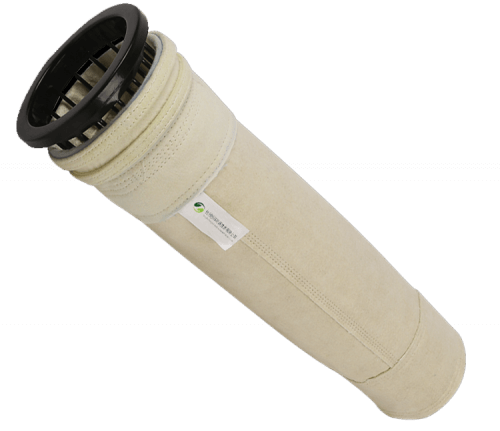
7. Use Surface Treatments Where They Add Value
Surface treatments can improve performance in specific environments. PTFE coating can support dust release and chemical resistance. Water and oil repellent treatments can help in moist or oily conditions. However, treatments should be selected for the application rather than added without analysis. HENGKE precisely matches fiber blends, weight, and surface treatments to the client plant conditions, helping industrial users balance filtration efficiency, pressure drop, and service life.
8. Monitor Pressure Drop and Leak Signals
Pressure drop is one of the most useful indicators of baghouse health. A gradual rise may indicate dust loading or cleaning issues, while a sudden change may signal bag damage, cage problems, or compartment leaks. Maintenance teams should track pressure drop, stack opacity, and fan load. Early leak detection allows repair before adjacent bags are damaged. Regular inspection of tube sheets, gaskets, and access doors also helps protect overall system integrity.
9. Follow a Practical Inspection Schedule
A simple inspection routine can extend fiberglass bag life. Teams should check bag tension, cage condition, dust accumulation, and cleaning performance at planned intervals. During shutdowns, bags can be inspected for abrasion, discoloration, moisture damage, or chemical attack. Records should be kept so that repeated failures can be traced to specific compartments, operating conditions, or maintenance practices. This data-driven approach supports better decisions and lower maintenance downtime.
10. Choose a Supplier with Technical Depth
Durability begins before the bag enters the baghouse. A supplier with technical textile experience can help specify the right media, identify risk factors, and support troubleshooting. Hangzhou Hengke Filter Environmental Protection Co., Ltd. is a technology-driven manufacturer specializing in industrial dust collector filter bags and bag cages. Its quality management is supported by ISO 9001:2015 and ISO 14001:2015 certifications, along with third-party technical textile testing reports. The company has established long-term supply relationships with major cement producers and serves heavy industries worldwide. Through optimized manufacturing processes and strong upstream material partnerships, HENGKE delivers premium-grade technical textiles at competitive pricing, helping plants lower emissions, reduce pressure drops, extend bag service life, and comply with environmental regulations.

Fiberglass filter bags can provide excellent strength and durability when they are correctly selected, stored, installed, and maintained. The most successful plants treat filtration media as part of an engineered system rather than a simple replacement item. By reviewing gas chemistry, protecting bags from handling damage, checking cages, controlling temperature and moisture, tuning cleaning, and monitoring performance, industrial teams can get more value from every bag. HENGKE supports this effort with customized filtration solutions, robust global supply experience, and a focus on stable quality for demanding baghouse operations.