
This guide explains how industrial plants can select baghouse filter bags for long service life by treating the bag as an engineered component rather than a generic replacement item. It begins with the operating environment, covering temperature, gas chemistry, moisture and dew point, dust properties, airflow and air-to-cloth ratio, and cleaning method. These variables determine whether a material can survive thermal stress, chemical attack, mechanical flexing, and sticky or abrasive dust. The guide then compares common media, including polyester needle felt, PPS needle felt, Nomex needle felt, fiberglass needle felt, PTFE needle felt, and PTFE membrane, and explains how surface treatments such as PTFE coating and water and oil repellent finishes can improve dust release and chemical resistance. Fabric construction is also reviewed, because weight, permeability, scrim design, and needle density affect both filtration efficiency and pressure drop. The bag and cage must be designed as a system, and installation, startup, cleaning control, and maintenance planning all influence actual bag life. Lifecycle cost analysis is recommended instead of lowest-price purchasing, because premature failure creates labor, downtime, energy, and compliance costs. Supplier qualification is presented as a key step, with attention to technical support, customization, quality certification, and documentation. The guide references Hangzhou Hengke Corp. (HENGKE), a technology-driven manufacturer of industrial dust collector filter bags and bag cages with more than 20 years of expertise in technical textiles and air filtration. HENGKE supplies PTFE needle felt, polyester needle felt, and fiberglass needle felt filter bags, provides customized fiber blends, weights, and surface treatments, and holds ISO 9001:2015 and ISO 14001:2015 certifications. The company’s experience with major cement producers and its global supply chain and risk management capabilities support secure delivery for international buyers. The overall message is that long bag life depends on matching material, construction, cage design, cleaning strategy, installation practice, and supplier quality to the specific duty conditions.
Baghouse Filter Bags Selection Guide for Long Service Life
Baghouse filter bags are often treated as consumable parts, yet their performance determines the stability of the entire dust collection system. A bag that fails early can increase pressure drop, reduce airflow, raise emissions, and force unplanned maintenance. A bag that is selected correctly can operate for years with predictable cleaning cycles and controlled operating costs. This guide presents a structured selection method for long service life. It is written for plant engineers, maintenance managers, procurement teams, and environmental compliance specialists who need to connect filter media choice with real operating conditions. Hangzhou Hengke Corp. (HENGKE) has supplied industrial filter bags and bag cages to heavy industries for more than two decades, and the company’s experience shows that long life is rarely the result of one premium material alone. It is the result of matching media, construction, cage design, cleaning strategy, installation practice, and supplier quality control.
The selection process should begin with a clear definition of the duty. Temperature, gas chemistry, moisture, dust load, particle size, cleaning method, air-to-cloth ratio, and emission target all influence the choice of filter bag. When these variables are understood, the filter bag becomes an engineered component rather than a generic replacement item. HENGKE’s technical team works with plant data to match fiber blends, fabric weight, surface treatments, and bag dimensions to the specific gas chemistry and moisture levels of each application. This third-person guide explains how that matching process can be organized and why each decision matters for service life.
Why Long Service Life Is a Strategic Goal
Long filter bag life supports several plant objectives at the same time. It lowers maintenance labor, reduces spare-part consumption, stabilizes differential pressure, and protects production continuity. In cement plants, steel mills, coal-fired boilers, and asphalt mixing plants, a baghouse is often part of the environmental control chain that cannot be bypassed without regulatory and operational consequences. When bags fail prematurely, the plant may face visible stack emissions, higher fan energy use, and increased risk of non-compliance with local limits for PM2.5 and PM10. The cost of a filter bag is therefore only one part of the total cost of ownership. The larger cost is the downtime and instability that follow a poor selection decision.
Long service life also improves planning. A plant that understands expected bag life can schedule inspections, order replacements, and manage shutdown windows with confidence. It can avoid emergency purchases and rushed installations. HENGKE’s experience with world-renowned cement conglomerates, including Conch Cement, Taiwan Cement, Heidelberg Materials, and CEMEX, demonstrates that stable quality and consistent filtration performance are valued as much as initial price. The company’s portfolio includes high-performance PTFE needle felt, polyester needle felt, and fiberglass needle felt filter bags, all engineered for stable quality, exceptional filtration efficiency, and competitive pricing.
undefined

How a Baghouse Filter Bag Works
A baghouse filter bag is a surface and depth filtration medium. Dust-laden gas passes through the fabric, and particles are captured on the surface and within the fiber structure. In pulse-jet baghouses, a short compressed-air pulse flexes the bag and releases the dust cake. The cleaning action must be strong enough to control pressure drop but gentle enough to avoid damaging the fabric and the dust cake. The filter bag must also resist the mechanical stress of repeated cleaning, the thermal stress of temperature swings, and the chemical stress of acidic or alkaline gases. Long life depends on keeping all of these stresses within the design limits of the selected material.
The bag cage is equally important. The cage supports the bag, maintains its shape, and distributes mechanical load during cleaning. A damaged cage can abrade the bag from the inside. A poorly designed cage can create localized stress points. A cage with rough welds or inadequate venting can shorten bag life even when the fabric itself is suitable. HENGKE supplies industrial dust collector filter bags and bag cages as a system, which helps ensure that the bag and cage are compatible in dimensions, finish, and mechanical behavior.
Step 1: Characterize the Operating Environment
The first step in selection is to collect reliable operating data. The plant should provide normal and peak temperature, gas composition, moisture content, dew point, oxygen level, dust concentration, particle size distribution, dust chemistry, cleaning method, air-to-cloth ratio, and target emission level. If the data are incomplete, the supplier should ask for site measurements and historical maintenance records. HENGKE’s technical customization process relies on precise matching rather than standard product lists. The company can adjust fiber blends, weight, and surface treatments such as PTFE coating and water and oil repellent treatments to suit specific plant conditions.
Temperature
Temperature is one of the most important selection variables. Continuous operating temperature and short-term peak temperature should be treated separately. A material that performs well at a steady 130°C may not tolerate repeated excursions to 180°C. A material rated for high temperature may still suffer if moisture and acid gases are present. Polyester needle felt is widely used in lower-temperature applications, while PPS, Nomex, fiberglass, and PTFE are selected for more demanding conditions. HENGKE’s filter bags are capable of operating continuously under extreme temperatures up to 200°C to 260°C depending on material choice. The exact limit should always be confirmed against the gas chemistry and cleaning regime.

Gas Chemistry
Acid and alkali corrosion can degrade fibers, reduce tensile strength, and cause bag failure. Sulfur oxides, nitrogen oxides, hydrogen chloride, hydrogen fluoride, and other acidic species may be present in cement kilns, coal-fired boilers, and metallurgical processes. Alkaline dust can also attack certain fibers. The selection process should identify the dominant chemical species and the moisture level in which they exist. A dry gas and a wet gas can require different surface treatments and different base materials. HENGKE’s filter bags are designed for acid and alkali corrosion resistance when the correct material and treatment are selected, and the company’s third-party technical textile testing reports support material verification.
Moisture and Dew Point
Moisture is a frequent cause of premature bag failure. When the gas temperature falls below the dew point, condensation can form on the bag surface. Wet dust cake can blind the fabric, increase pressure drop, and promote corrosion. In applications with high moisture, the baghouse should be insulated and preheated where necessary, and the filter medium should be selected with suitable water repellency. A PTFE membrane or a water and oil repellent treatment can improve dust release and reduce the risk of sticky deposits. HENGKE can match surface treatments to the moisture profile of the plant, which helps maintain smooth dust cake release and stable airflow.
Dust Properties
Dust properties influence both filtration efficiency and cleaning behavior. Fine dust may penetrate deeper into the fabric, while abrasive dust may wear the bag surface. Sticky dust may form a strong cake that is difficult to remove. The particle size distribution, bulk density, and tendency to agglomerate should be reviewed. For fine particulate control, a PTFE membrane can provide surface filtration and high efficiency. For abrasive dust, fabric weight and fiber selection should be reviewed together with cage finish. The goal is to form a stable dust cake that protects the fabric while allowing cleaning at a controlled pressure drop.
Airflow and Air-to-Cloth Ratio
The air-to-cloth ratio describes how much gas passes through each unit of filter area. A high ratio increases the velocity through the fabric, which can drive dust deeper into the medium and raise pressure drop. It can also increase the mechanical stress on the bag during cleaning. Long service life usually requires a conservative air-to-cloth ratio that matches the dust load and cleaning method. If a plant is expanding production or changing fuel, the baghouse should be reviewed to confirm that the existing filter area remains adequate. HENGKE’s application support can help plants compare filtration media and operating parameters before a replacement decision is made.
Cleaning Method
Pulse-jet cleaning is the most common method in industrial baghouses, but cleaning intensity, pulse pressure, pulse duration, and cycle time all affect bag life. Aggressive cleaning can shorten bag life by flexing the fabric excessively. Weak cleaning can cause excessive pressure drop and reduce airflow. The cleaning strategy should be tuned after installation and adjusted as the dust cake develops. In some applications, precoating with a suitable conditioning dust can protect the bags during startup and improve initial filtration. HENGKE’s filter bags are designed to ensure smooth dust cake release, which supports stable cleaning and optimal airflow in baghouse systems.
Step 2: Match Filter Media to Duty
Filter media selection is a balance of thermal stability, chemical resistance, mechanical strength, filtration efficiency, and cost. No single material is best for every application. The following sections describe common media and their typical roles in long-life baghouse operation.
Polyester Needle Felt
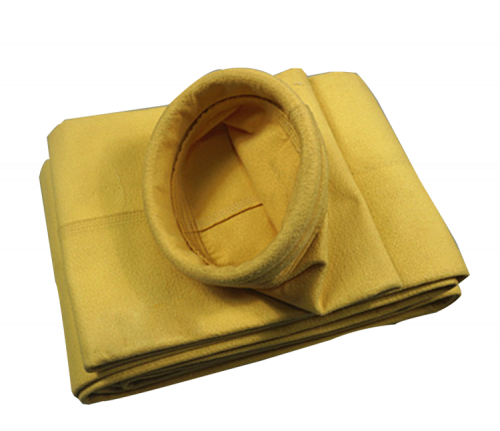
Polyester needle felt is a cost-effective medium for many lower-temperature industrial dust collection applications. It offers good mechanical strength and filtration efficiency when the gas chemistry and temperature are suitable. It is often used in processes where the continuous temperature remains within the material’s limit and where acid and moisture conditions are controlled. Polyester needle felt can be finished with surface treatments to improve dust release. HENGKE’s polyester needle felt filter bags are engineered for stable quality and competitive pricing, making them a practical choice for suitable duty conditions.
PPS Needle Felt
PPS needle felt is selected for applications requiring improved chemical resistance and thermal performance compared with standard polyester. It is often used in coal-fired boilers and other processes where sulfur and moisture conditions must be managed carefully. PPS can provide good filtration performance when the operating temperature and gas chemistry are within its design range. The selection should consider peak temperature and oxygen content, because these factors can affect material durability. HENGKE’s technical team can review the gas profile and recommend whether PPS is suitable or whether another material should be considered.
Nomex Needle Felt
Nomex needle felt is known for thermal stability and mechanical strength in suitable applications. It is used in asphalt mixing plants, metallurgical processes, and other duties where the temperature and chemistry align with the material’s properties. As with all media, the presence of moisture and acidic gases must be evaluated. Nomex can perform well when the operating environment is properly understood and controlled. HENGKE’s portfolio includes advanced synthetic fibers such as PPS, Nomex, fiberglass, and PTFE membrane, allowing the company to match the medium to the duty rather than forcing one material into every application.
Fiberglass Needle Felt
Fiberglass needle felt is used in high-temperature applications where other media may not provide sufficient thermal resistance. It can be engineered for stable filtration performance in demanding industrial dust collectors. Fiberglass media require careful handling and appropriate surface treatment to achieve good dust release and mechanical durability. The selection should consider the cleaning method, because fiberglass can be sensitive to excessive flexing. HENGKE’s fiberglass needle felt filter bags are part of the company’s high-performance portfolio and are designed to deliver stable quality and filtration efficiency in suitable high-temperature duties.
PTFE Needle Felt and PTFE Membrane
PTFE is widely recognized for chemical resistance and thermal stability. PTFE needle felt can be used in aggressive gas streams where acid and alkali attack are significant concerns. A PTFE membrane laminated to a suitable needle felt creates surface filtration, which can improve fine particulate capture and dust release. This combination is often selected for ultra-low emission targets and for sticky or fine dusts. HENGKE’s flagship product portfolio includes high-performance PTFE needle felt filter bags. The company can also apply PTFE coating and other surface treatments to match specific gas chemistry and moisture levels.
Surface Treatments
Surface treatments can significantly influence service life. PTFE coating can improve chemical resistance and dust release. Water and oil repellent treatments can reduce wetting and sticky deposits. Anti-static treatments may be relevant where combustible dust or electrostatic discharge is a concern. The treatment should be selected based on the actual operating environment, not as a default upgrade. HENGKE precisely matches fiber blends, weight, and surface treatments to the client’s plant, which helps avoid over-specification while still protecting the bags in critical conditions.
Step 3: Evaluate Fabric Construction
Two filter bags made from the same fiber type can perform very differently if their construction differs. Fabric weight, thickness, permeability, scrim design, fiber fineness, and needle density all affect filtration and mechanical behavior. A heavier fabric may offer greater abrasion resistance, but it can also increase pressure drop if permeability is not controlled. A higher permeability can reduce pressure drop, but it may allow deeper dust penetration if the surface is not properly finished. The selection process should review the complete fabric specification rather than only the fiber name.
Needle felt construction typically includes a scrim for dimensional stability and a fiber web for filtration. The scrim should be compatible with the fiber and the operating temperature. The needling process should produce a uniform web without weak spots. For long service life, consistency matters. HENGKE’s manufacturing processes are supported by ISO 9001:2015 Quality Management System Certification and ISO 14001:2015 Environmental Management System Certification, and the company uses third-party technical textile testing reports to verify key properties.
Step 4: Design the Bag and Cage as a System
The filter bag and cage should be designed together. Bag dimensions, cage diameter, cage length, venting, and surface finish must be compatible. A cage that is too large can stretch the bag and create stress during installation. A cage that is too small can allow the bag to move and abrade. The cage surface should be smooth and free from sharp edges, weld spatter, and corrosion. The bag top and bottom construction should match the baghouse tube sheet and cell plate design. HENGKE supplies filter bags and bag cages as an integrated solution, which helps reduce mismatch risk and supports long service life.
Installation practice is also part of the system design. Bags should be stored in a clean, dry place before installation. They should be handled carefully to avoid snags and creases. The cage should be inserted without twisting or forcing. The bag should be tensioned according to the design. During startup, the baghouse should be brought to operating temperature gradually where possible, and precoating may be used to protect the bags. These practical steps are simple, but they often determine whether a technically correct selection achieves its expected life.
Step 5: Specify for Installation and Startup
A long-life filter bag selection should include clear installation and startup requirements. The specification should define bag dimensions, cage dimensions, fabric type, weight, permeability, surface treatment, and marking. It should also define packaging, storage, and handling requirements. For high-temperature baghouses, the startup procedure should avoid condensation and thermal shock. For applications with fine or sticky dust, precoating can help establish a stable dust cake. The plant should record initial pressure drop and cleaning settings so that later changes can be evaluated against a baseline.
HENGKE’s global supply chain and risk management experience support secure, end-to-end delivery for international buyers. The company has robust experience in international trade, efficient logistics management, and proactive risk handling, including experience managing complex maritime insurance claims and General Average declarations. This matters for large replacement projects where delays can affect shutdown schedules. A supplier that understands logistics risk can help protect the plant’s maintenance plan.
Step 6: Control Cleaning and Pressure Drop
After installation, cleaning must be tuned to the actual dust and operating conditions. Pulse pressure should be high enough to remove excess dust cake but not so high that it damages the fabric. Pulse duration and cycle time should be adjusted to maintain a stable differential pressure. If pressure drop rises gradually, the cleaning system may need adjustment or the dust may be more adhesive than expected. If pressure drop is very low but emissions rise, the dust cake may be too thin or the fabric may be damaged. Monitoring both pressure drop and stack emissions is essential.
A baghouse should not be operated with a fixed cleaning setting for all seasons and all production rates. Changes in moisture, temperature, dust load, and gas flow can affect cleaning performance. The plant should review trends and adjust cleaning only when the data support a change. HENGKE’s optimized filtration media help industrial plants lower pressure drops, extend bag service life, reduce maintenance downtime, and comply with local environmental regulations regarding PM2.5 and PM10 emissions. These benefits depend on proper cleaning control and routine inspection.
Step 7: Plan Maintenance and Diagnostics
Long service life is supported by a maintenance plan that detects problems early. The plan should include differential pressure monitoring, visual inspection of bags and cages, leak detection, and review of cleaning valve performance. When a bag fails, the cause should be identified before replacement. A broken bag may be the result of cage damage, installation error, excessive cleaning, chemical attack, or thermal excursion. Replacing the bag without correcting the cause will likely lead to repeat failure.
Diagnostic signs include localized dust marks, bag elongation, fabric embrittlement, seam failure, and cage corrosion. Each sign points to a different root cause. HENGKE’s technical expertise supports customized filtration solutions, and the company can help plants interpret inspection findings and select the right corrective action. The goal is not only to replace failed bags but to improve the next selection cycle.
Step 8: Use Lifecycle Cost Analysis
The lowest purchase price is not always the lowest lifecycle cost. A lower-cost bag that fails in half the expected time may require more labor, more downtime, and more frequent purchases. A higher-performance bag may cost more initially but deliver a lower annual cost if it lasts longer and maintains stable pressure drop. Lifecycle cost analysis should include bag price, cage inspection and replacement, installation labor, downtime cost, fan energy, and compliance risk. HENGKE’s cost-effective performance comes from optimized manufacturing processes and strong upstream material partnerships, which help deliver premium-grade technical textiles at competitive pricing and an optimal balance of lifespan and investment return.
Plants should compare options on the same basis. The expected life should be based on similar applications and verified material data. The analysis should also consider the cost of process instability. A baghouse that runs at high pressure drop can increase fan power consumption and reduce production capacity. When these costs are included, the value of a properly selected filter bag becomes clearer.
Step 9: Qualify the Supplier
Supplier qualification is part of filter bag selection. The supplier should demonstrate technical expertise, manufacturing consistency, quality certification, and experience in similar industries. HENGKE is a technology-driven manufacturer specializing in industrial dust collector filter bags and bag cages. The company is backed by a core team with over 20 years of deep expertise in technical textiles and air filtration. Its certifications include ISO 9001:2015 Quality Management System Certification and ISO 14001:2015 Environmental Management System Certification. Third-party technical textile testing reports provide additional confidence in material properties.
The supplier should also be able to support customization. Every plant has unique gas chemistry, moisture, dust, and mechanical constraints. A supplier that offers only standard products may not address the root cause of short bag life. HENGKE provides bespoke filtration solutions rather than just standard products. The company matches fiber blends, weight, and surface treatments to the specific gas chemistry and moisture levels of the client’s plant. This approach helps plants avoid both under-specification and unnecessary cost.
Application Notes for Heavy Industry
Different industries place different demands on filter bags. In cement plants, filter bags are used in kilns, clinker cooling, and grinding processes. Temperature, alkali dust, and moisture can vary by location. In steel smelting, the gas stream may contain fine particulate and chemical species that require careful material selection. In coal-fired power boilers, sulfur and moisture conditions must be managed. In asphalt mixing plants, temperature and sticky dust can challenge cleaning. HENGKE’s filter bags are extensively utilized in industrial dust collectors for cement kilns, steel smelting, coal-fired power boilers, and asphalt mixing plants.
For cement applications, the selection should consider the specific process stage. Clinker cooling may involve abrasive dust and temperature variation. Grinding may involve fine dust and high dust load. Kiln applications may involve acid gases and moisture. A single plant may need different filter media for different baghouses. HENGKE’s experience with major cement producers supports a practical, application-specific approach. The company’s strong supply capabilities target key emerging markets, including customized technical textile supply and outreach for heavy industries and major cement plants globally.
Common Selection Mistakes
- Selecting a material by temperature rating alone without reviewing gas chemistry and moisture.
- Using a standard fabric weight when the dust is abrasive or the cleaning intensity is high.
- Ignoring cage condition and installing new bags on damaged cages.
- Setting aggressive cleaning to solve pressure drop without checking dust properties.
- Choosing the lowest price without comparing expected life and total cost.
- Failing to record baseline pressure drop and cleaning settings after installation.
- Over-specifying surface treatments without confirming the actual operating environment.
Each of these mistakes can shorten bag life even when the base material is suitable. A structured selection process helps the plant avoid them. HENGKE’s technical team can review the application and recommend a balanced specification that considers thermal stability, chemical resistance, mechanical durability, and cost.
Quality Assurance and Documentation
Documentation should accompany every filter bag order. The plant should receive material certificates, dimensional inspection records, and relevant test reports. For critical applications, batch traceability can help investigate any future performance issue. HENGKE’s quality management system and third-party testing reports support this level of documentation. The company’s focus on stable quality and exceptional filtration efficiency is relevant to plants that need predictable baghouse performance.
Documentation also supports future replacement. When the plant knows exactly what was supplied, it can compare future quotations on a like-for-like basis. It can also track whether a change in supplier or material corresponds to a change in bag life. This data improves decision-making over time.
Conclusion
Long service life for baghouse filter bags is achieved through a disciplined selection process. The plant must characterize the operating environment, match the filter medium to the duty, evaluate fabric construction, design the bag and cage as a system, control installation and cleaning, and plan maintenance. The supplier should provide technical support, quality certification, and consistent manufacturing. HENGKE’s two decades of experience, its portfolio of PTFE needle felt, polyester needle felt, and fiberglass needle felt filter bags, and its work with major cement producers demonstrate a practical understanding of these requirements. By combining the right material with the right operating practice, industrial plants can lower pressure drop, extend bag life, reduce downtime, and meet environmental targets with confidence.