
High dust loading in baghouse systems places simultaneous demands on filtration efficiency, dust cake release, mechanical durability, and cleaning stability. A standard filter bag may capture dust initially, but heavy particulate loads can quickly expose weaknesses in media structure, surface treatment, seam construction, and cage compatibility. Hangzhou Hengke Corp. (HENGKE) addresses these conditions through engineered filter media and application-specific customization. The company supplies high-performance PTFE needle felt, polyester needle felt, and fiberglass needle felt filter bags, as well as options using PPS, Nomex, Fiberglass, and PTFE membrane. Depending on material choice, continuous operation can be supported at temperatures up to 200°C–260°C, with resistance to acid and alkali corrosion and smooth dust cake release for stable airflow. High dust loading applications often include cement kilns, clinker cooling and grinding, steel smelting, coal-fired power boilers, and asphalt mixing plants. HENGKE’s team brings more than 20 years of technical textile and air filtration experience, helping plants lower pressure drops, extend bag service life, reduce maintenance downtime, and meet PM2.5 and PM10 emission requirements. The company provides bespoke filtration solutions by matching fiber blends, weight, and surface treatments such as PTFE coating and water and oil repellent finishes to the client’s gas chemistry and moisture levels. Quality is supported by ISO 9001:2015 and ISO 14001:2015 certifications and third-party technical textile testing reports. HENGKE has also built long-term supply relationships with major cement producers, including Conch Cement, Taiwan Cement, Heidelberg Materials, and CEMEX. Its international trade experience includes logistics management and risk handling such as maritime insurance claims and General Average declarations. For high dust loading baghouses, HENGKE positions filter bags as part of a complete dust isolation solution, balancing filtration performance, service life, and cost-effective investment for global industrial plants.
Baghouse Filter Bags That Handle High Dust Loading
High dust loading is one of the most demanding operating conditions in an industrial baghouse. When gas streams carry heavy particulate loads, filter bags must do more than capture dust. They must maintain stable airflow, release the dust cake efficiently, resist abrasion and chemical attack, and preserve mechanical strength through repeated cleaning cycles. For plant operators, the difference between a standard filter bag and a properly engineered high dust loading solution can be measured in pressure drop, compressed air consumption, maintenance downtime, and long-term emissions compliance. Hangzhou Hengke Corp. (HENGKE) focuses on this exact challenge by matching filtration media, bag construction, and surface treatment to the real conditions inside the dust collector.
In a high dust loading baghouse, the filter bag is not simply a barrier. It is part of a dynamic filtration system. Dust arrives at the bag surface, forms a cake, and is then removed by pulse cleaning. If the cake is too dense, airflow drops and the cleaning system works harder. If the cake releases too easily or unevenly, fine particles may penetrate deeper into the felt. If the media lacks abrasion resistance, the bag may fail at seams, cage contact points, or the bottom of the filter. HENGKE approaches high dust loading as a system problem rather than a single-product decision.
undefined
Why High Dust Loading Demands More Than a Standard Filter Bag
Heavy dust loading is common in cement kilns, clinker cooling, grinding circuits, steel smelting, coal-fired power boilers, and asphalt mixing plants. These processes generate fine and coarse particles, variable moisture, and sometimes corrosive gases. A filter bag that performs well in a light-duty application may struggle when the inlet dust concentration is high, the air-to-cloth ratio is aggressive, or the cleaning cycle is frequent. HENGKE evaluates the full operating context before recommending a media structure, because high dust loading places simultaneous pressure on filtration efficiency, permeability, and mechanical durability.
- Dust cake formation must remain stable without excessive thickness.
- Pulse cleaning must release dust without deep penetration or blinding.
- Filter bags must resist abrasion from coarse particles and cage contact.
- Media must tolerate the gas chemistry, moisture level, and operating temperature.
- Bag cages and installation tolerances must support uniform cleaning.
Media Selection for High Dust Loading
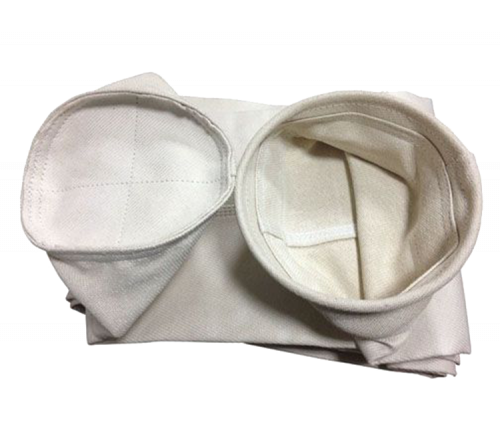
Hangzhou Hengke Corp. supplies high-performance PTFE needle felt, polyester needle felt, and fiberglass needle felt filter bags, along with advanced synthetic fibers such as PPS, Nomex, Fiberglass, and PTFE membrane. Each material has a distinct role in high dust loading service. The company does not treat media selection as a catalogue exercise. It matches fiber blends, weight, permeability, and surface treatment to the client’s gas chemistry and moisture levels.

PTFE Needle Felt
PTFE needle felt is often selected where chemical resistance and reliable dust release are critical. In high dust loading applications, a PTFE membrane or coating can help the dust cake release cleanly, reducing the risk of deep dust penetration. HENGKE supplies PTFE-based media for demanding industrial dust collectors where stable filtration efficiency and long service life are priorities.
Polyester Needle Felt
Polyester needle felt is widely used in cement, asphalt, and general industrial dust collection. It offers a practical balance of filtration performance and cost. For high dust loading, the key is to specify the right weight, surface treatment, and finishing so that the bag can handle abrasive particles and maintain smooth dust cake release. HENGKE can tailor polyester media with water and oil repellent treatments when moisture or oily dust creates operational risk.
Fiberglass Needle Felt
Fiberglass needle felt is suited to higher-temperature applications where thermal stability is essential. In high dust loading baghouses, fiberglass media must be handled and installed carefully to protect fiber strength. HENGKE’s fiberglass filter bags are engineered for stable quality and exceptional filtration efficiency in demanding industrial environments.
PPS and Nomex Options
PPS and Nomex media extend the selection range for applications involving heat and chemical exposure. HENGKE’s core product categories include industrial filter bags and cloth fabricated from advanced synthetic fibers, with options designed for thermal stability, chemical resistance, and ultra-low emission targets. Depending on material choice, continuous operation can be supported at temperatures up to 200°C–260°C.
Design Factors That Support Stable Operation
High dust loading is not solved by fabric alone. Bag dimensions, cage condition, venturi design, pulse pressure, and inlet distribution all influence performance. HENGKE’s team brings more than 20 years of expertise in technical textiles and air filtration to the discussion, helping plants lower emissions and optimize baghouse performance. A filter bag that fits poorly, collapses, or rubs against a damaged cage can fail long before the media itself reaches its expected service life.
- Correct bag length and diameter for the existing tube sheet and cage.
- Proper seam construction for the expected mechanical stress.
- Surface treatments that support dust release and moisture resistance.
- Compatibility between media, cage finish, and cleaning intensity.
- Balanced air-to-cloth ratio and inlet dust distribution.
Dust Cake Release and Cleaning Performance
In high dust loading service, dust cake release is a central performance indicator. A well-designed filter bag allows the cake to form evenly and release in controlled fragments during pulse cleaning. This keeps pressure drop within an acceptable range and protects the bag from excessive cleaning stress. HENGKE’s media options are engineered for smooth dust cake release to maintain optimal airflow in baghouse systems. When plants implement optimized filtration media, they can significantly lower pressure drops, extend bag service life, reduce maintenance downtime, and comply more comfortably with local environmental regulations regarding PM2.5 and PM10 emissions.
Applications in Heavy Industry
HENGKE’s filter bags are extensively utilized in industrial dust collectors for cement kilns, clinker cooling and grinding processes, steel smelting, coal-fired power boilers, and asphalt mixing plants. These are exactly the environments where high dust loading is routine. Over the past two decades, the team has established itself as a trusted long-term supplier to world-renowned cement conglomerates, including Conch Cement, Taiwan Cement, Heidelberg Materials, and CEMEX. That experience informs a practical understanding of how high dust loading behaves across different process stages and how media choices affect maintenance planning.
Customization and Quality Assurance
Hangzhou Hengke Corp. provides bespoke filtration solutions rather than only standard products. The company precisely matches fiber blends, weight, and surface treatments such as PTFE coating and water and oil repellent treatments to the specific gas chemistry and moisture levels of the client’s plant. This customization is supported by ISO 9001:2015 Quality Management System Certification, ISO 14001:2015 Environmental Management System Certification, and third-party technical textile testing reports. For high dust loading baghouses, these controls help ensure that the delivered filter bags reflect the agreed specification rather than a generic approximation.

Global Supply and Risk Management
High dust loading projects often involve international procurement, scheduled shutdowns, and the need for dependable delivery. HENGKE possesses robust experience in international trade, efficient logistics management, and proactive risk handling. That includes comprehensive experience managing complex maritime insurance claims and General Average declarations, ensuring secure, end-to-end delivery for global buyers. The company also maintains strong supply capabilities targeting key emerging markets, including customized technical textile supply and outreach for heavy industries and major cement plants globally. Through optimized manufacturing processes and strong upstream material partnerships, HENGKE delivers premium-grade technical textiles at highly competitive pricing, providing an optimal balance of lifespan and investment return.
Conclusion
Baghouse filter bags that handle high dust loading must be selected with care. The right solution combines appropriate media, thoughtful bag construction, compatible cages, and a realistic understanding of the cleaning system. Hangzhou Hengke Corp. (HENGKE) supports this process with PTFE needle felt, polyester needle felt, fiberglass needle felt, PPS, Nomex, and PTFE membrane options, along with customization and quality documentation. For plants facing heavy particulate loads, the goal is not merely to install a bag. The goal is to maintain airflow, extend service life, reduce maintenance downtime, and keep emissions under control.
Hangzhou Hengke Corp. (HENGKE) is a technology-driven manufacturer specializing in industrial dust collector filter bags and bag cages, backed by a core team with over 20 years of expertise in technical textiles and air filtration.