
Hangzhou Hengke Corp. (HENGKE) is a technology-driven manufacturer of industrial dust collector filter bags and bag cages, with more than 20 years of expertise in technical textiles and air filtration. The company supplies PTFE needle felt, polyester needle felt, and fiberglass needle felt filter bags, along with bag cages and end-to-end dust isolation solutions for heavy industries. This blog explains why fiberglass filter bags can fail through abrasion even when their temperature and chemical resistance are suitable, and it outlines a practical selection approach for better abrasion control. Key factors include dust hardness and particle shape, filtration velocity, pulse-jet cleaning intensity, moisture and acid dew point, cage condition, bag fit, seam quality, installation practice, and surface treatment. Fiberglass needle felt can operate at high temperatures depending on material choice and system design, but abrasion resistance depends on fiber blend, weight, scrim, needling, and coatings such as PTFE membrane, PTFE coating, and water and oil repellent treatments. HENGKE’s customization approach matches fiber blends, weight, and surface treatments to the specific gas chemistry and moisture levels of each plant. The company serves demanding applications in cement kilns, clinker cooling and grinding, steel smelting, coal-fired power boilers, and asphalt mixing plants. Its filtration media are designed to support low pressure drop, long bag life, reduced maintenance downtime, and compliance with PM2.5 and PM10 regulations. HENGKE operates under ISO 9001:2015 and ISO 14001:2015 certifications and uses third-party technical textile testing reports. The team has supplied major cement producers including Conch Cement, Taiwan Cement, Heidelberg Materials, and CEMEX, and it supports global buyers through international trade experience, logistics management, and risk handling for complex shipments. For plants choosing fiberglass filter bags, the central message is that abrasion control should be evaluated as a system issue before purchase, not as a single fabric specification.
Choosing Fiberglass Filter Bags with Better Abrasion Control
Fiberglass filter bags are often specified for high-temperature industrial dust collection because they can tolerate harsh thermal and chemical conditions. Yet abrasion remains one of the most practical and costly failure modes in a baghouse. A bag that offers excellent temperature resistance can still fail early if the filtration medium, bag construction, cage interface, cleaning regime, and installation practice are not aligned with the abrasive nature of the dust stream. For plant operators, choosing fiberglass filter bags with better abrasion control is therefore not a simple purchasing decision. It is an engineering decision that links filtration media, mechanical design, operating data, and maintenance discipline.
Hangzhou Hengke Corp., known as HENGKE, approaches this challenge as a technology-driven manufacturer of industrial dust collector filter bags and bag cages. The company’s team has more than 20 years of experience in technical textiles and air filtration, and its product portfolio includes PTFE needle felt, polyester needle felt, and fiberglass needle felt filter bags. For high-temperature applications where fiberglass is selected, the company focuses on stable quality, filtration efficiency, and cost-effective performance rather than a single material specification. This perspective is important because abrasion control in fiberglass bags depends on the complete filtration system, not only on the fiber.
Why Abrasion Matters in Fiberglass Baghouses
Abrasion in a baghouse can be gradual or localized. Gradual abrasion occurs when dust-laden gas passes continuously across the bag surface, especially at high filtration velocities. Localized abrasion often appears where the bag contacts the cage, where the bag is clamped or sewn, where the inlet dust stream strikes the bag directly, or where pulse-jet cleaning causes repeated flexing and movement. Fiberglass media can provide high tensile strength and thermal stability, but glass fibers are also brittle compared with some synthetic fibers. Once the finish or surface protection is worn, the fibers can be exposed to further mechanical damage. The result can be pinholes, seam failure, or a reduction in filtration efficiency that increases pressure drop and emissions.
undefined
The first step in selecting better abrasion-resistant fiberglass bags is to understand the dust. Particle size, shape, hardness, concentration, and moisture all influence wear. Sharp, angular particles such as clinker dust, fly ash with hard inclusions, and some metal or mineral dusts can be more aggressive than rounded particles. High inlet dust loading and poorly designed inlet distribution can concentrate particles on a small area of the bag. Similarly, high can velocity, excessive cleaning pressure, and short cleaning intervals can increase mechanical stress. A fiberglass bag that performs well in one kiln or boiler may fail quickly in another if these variables are ignored.
Filtration Media and Construction Choices
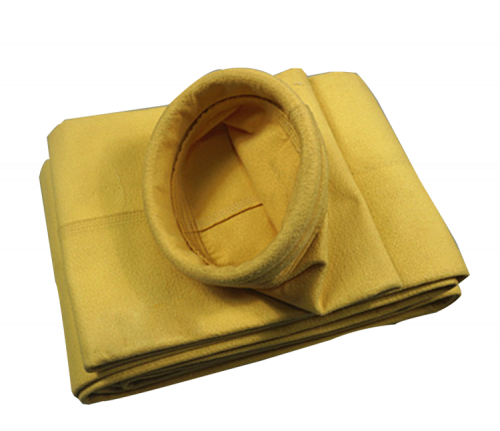
Fiberglass needle felt filter bags are often chosen for applications that require continuous operation at elevated temperatures. Depending on material choice and system design, industrial filter media can operate under extreme temperatures up to 200°C to 260°C. Fiberglass offers thermal stability and chemical resistance, while needle felt construction can provide a dense filtration surface and good dust cake formation. However, the abrasion resistance of a needle felt is influenced by fiber blend, weight, needling density, scrim reinforcement, and surface treatment. A heavier fabric is not automatically better if the surface is not designed to release dust or if the bag fit causes mechanical rubbing.
Surface treatments are particularly important. PTFE membrane and PTFE coating can improve dust release and reduce the tendency for sticky dust to adhere to the bag. Water and oil repellent treatments can help in applications with moisture or condensable hydrocarbons. Anti-abrasion finishes and protective coatings can reduce friction at the cage interface, but they must be compatible with the gas chemistry and cleaning method. HENGKE’s customization approach matches fiber blends, weight, and surface treatments to the specific gas chemistry and moisture levels of the client’s plant. This is a more reliable method than selecting a standard fiberglass bag from a catalogue without reviewing the operating envelope.
Bag Design and Cage Interface
Many abrasion problems begin at the cage. A cage that is out of tolerance, has rough wires, broken welds, or missing coating can wear through a filter bag from the inside. The bag should fit the cage without excessive tension or slack. If the bag is too tight, installation can damage the fabric and the bag may be stressed during pulse cleaning. If the bag is too loose, it can move and rub against the cage or adjacent bags. The bottom of the bag, the top cuff, and the seam areas deserve particular attention because they often experience concentrated mechanical stress. HENGKE supplies industrial filter bags and bag cages as part of an end-to-end dust isolation solution, which allows the bag and cage interface to be considered together rather than as separate purchases.
Seam construction also affects abrasion control. Stitching should be appropriate for the fabric and operating temperature, and seam orientation should be considered during installation. Poorly finished seams can create ridges that wear against the cage or cause localized stress. For fiberglass media, handling during installation is critical. Bags should not be dragged across sharp edges, folded sharply, or forced over rough cages. Maintenance teams should inspect cages, tube sheets, and inlet baffles whenever bags are replaced. A new set of high-performance fiberglass bags can fail prematurely if the baghouse has burrs, broken welds, or a damaged cage that was not corrected.

Operating Conditions That Influence Wear
Filtration velocity is one of the most practical levers for abrasion control. Higher velocity increases the kinetic energy of dust particles and can drive dust deeper into the media. It also increases pressure drop and can promote more frequent cleaning. In abrasive applications, a conservative air-to-cloth ratio may extend bag life even if it requires more filtration area. Pulse-jet cleaning pressure and frequency should also be reviewed. Excessive cleaning can flex the fabric and accelerate wear at the cage contact points, while insufficient cleaning can cause deep dust penetration and high pressure drop. The goal is stable operation with smooth dust cake release, not maximum cleaning intensity.
Moisture and acid dew point are additional factors. Wet dust can adhere to the bag, bridge between bags, and create hard deposits that rub or abrade during cleaning. Acid condensation can degrade finishes and reduce the effectiveness of surface treatments. In cement kilns, clinker cooling, grinding processes, steel smelting, coal-fired power boilers, and asphalt mixing plants, the gas chemistry and moisture profile can vary significantly. HENGKE’s filtration solutions are tailored to these application scenarios, with the aim of lowering pressure drops, extending bag service life, reducing maintenance downtime, and helping plants comply with local environmental regulations for PM2.5 and PM10 emissions.
Selection Checklist for Abrasion Control
- Confirm the maximum continuous temperature and identify any temperature spikes.
- Review dust hardness, particle shape, loading, and particle size distribution.
- Check filtration velocity and consider a conservative air-to-cloth ratio for abrasive dust.
- Inspect cage condition, coating, weld quality, and dimensional tolerance.
- Review pulse-jet cleaning pressure, frequency, and nozzle alignment.
- Evaluate moisture, acid dew point, and condensable components in the gas stream.
- Select fiberglass needle felt weight, scrim, and surface treatment based on the operating data.
- Plan careful installation, bag tension, and seam orientation.
- Establish a baseline pressure drop and inspection schedule after commissioning.
This checklist is not a substitute for site-specific engineering, but it helps buyers compare fiberglass filter bag options on a more complete basis. A low-cost bag that fails early is rarely the lowest-cost solution. The better measure is total cost of ownership, including bag price, installation labor, downtime, emissions risk, and replacement frequency. HENGKE’s cost-effective performance approach is built around optimized manufacturing processes and strong upstream material partnerships, with the objective of delivering premium-grade technical textiles at competitive pricing and a balanced lifespan and investment return.
Quality Assurance and Global Supply
For industrial buyers, quality consistency is as important as technical specification. Hangzhou Hengke Corp. operates under an ISO 9001:2015 Quality Management System Certification and an ISO 14001:2015 Environmental Management System Certification. The company also uses third-party technical textile testing reports to support product verification. These measures help buyers evaluate fiberglass filter bags with more confidence, especially when the application involves high temperatures, abrasive dust, and continuous operation. Over the past two decades, the team has established itself as a trusted long-term supplier to world-renowned cement conglomerates, including Conch Cement, Taiwan Cement, Heidelberg Materials, and CEMEX.

International projects also require reliable logistics and risk management. HENGKE has experience in international trade, efficient logistics management, and proactive risk handling, including complex maritime insurance claims and General Average declarations. This matters for global buyers who need secure, end-to-end delivery of filter bags and cages. The company’s targeted industrial benchmarks include customized technical textile supply and outreach for heavy industries and major cement plants globally. For a plant selecting fiberglass filter bags with better abrasion control, a supplier that understands both filtration engineering and international delivery risk can reduce project uncertainty.
Conclusion
Choosing fiberglass filter bags with better abrasion control requires a system-level view. The bag material, surface treatment, bag design, cage condition, filtration velocity, cleaning regime, dust characteristics, and installation practice all interact. Fiberglass can be an excellent choice for high-temperature dust collection, but it must be matched to the abrasive reality of the baghouse. Hangzhou Hengke Corp. supports this process through customized filtration media, fiberglass needle felt bags, bag cages, technical textile expertise, quality certifications, and global supply experience. By evaluating abrasion control before the purchase order is placed, industrial plants can improve bag life, reduce maintenance downtime, and protect long-term baghouse performance.